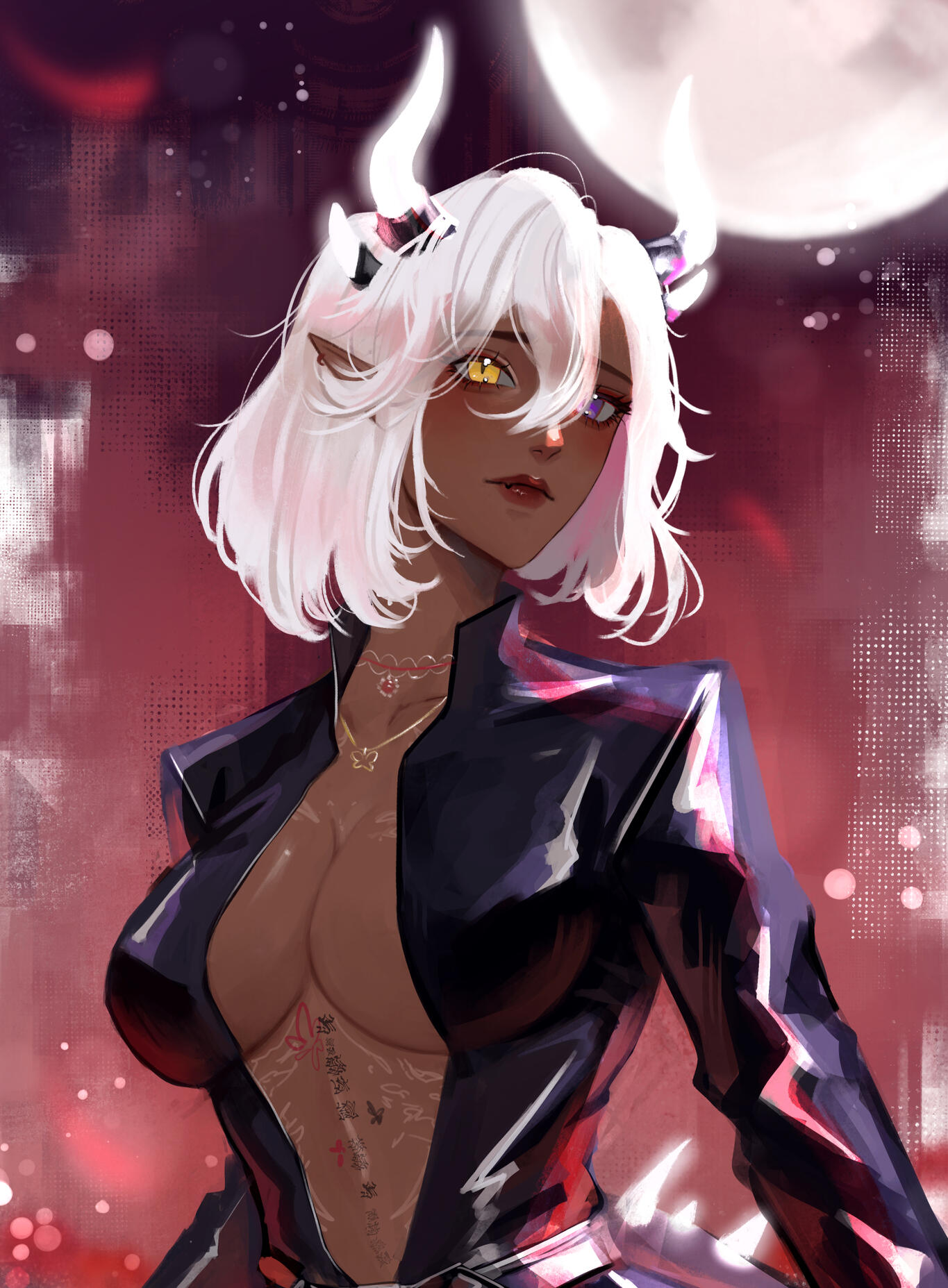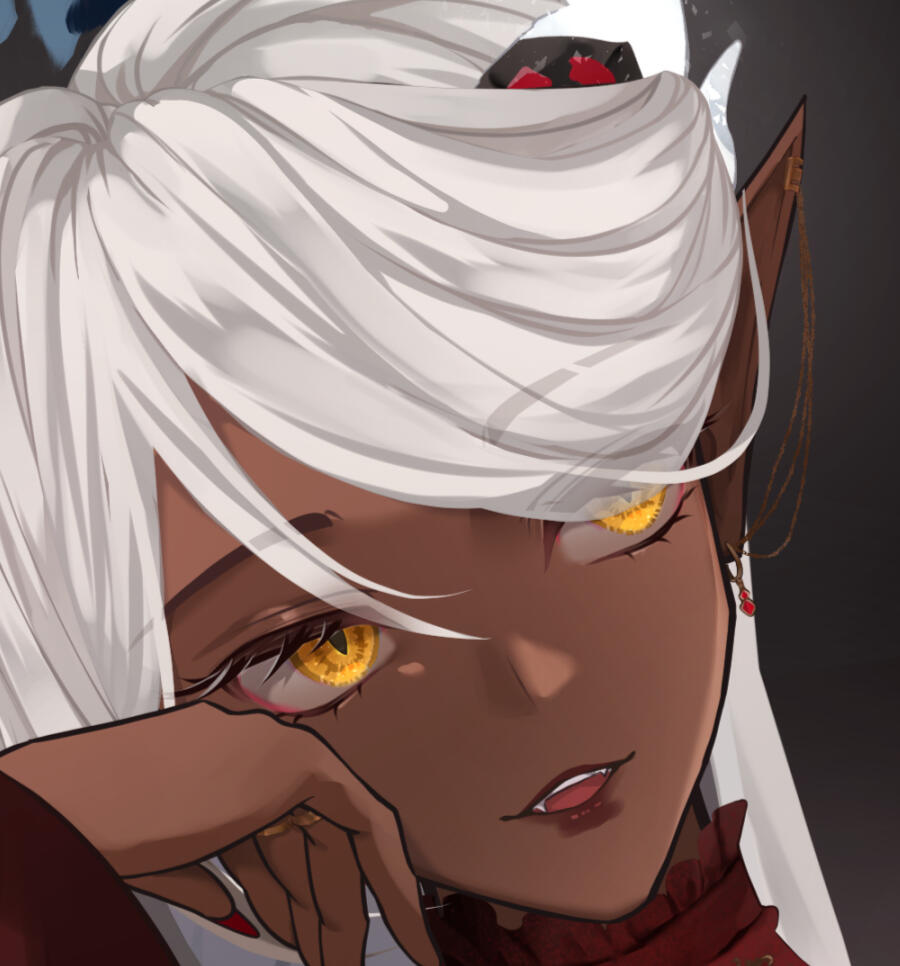
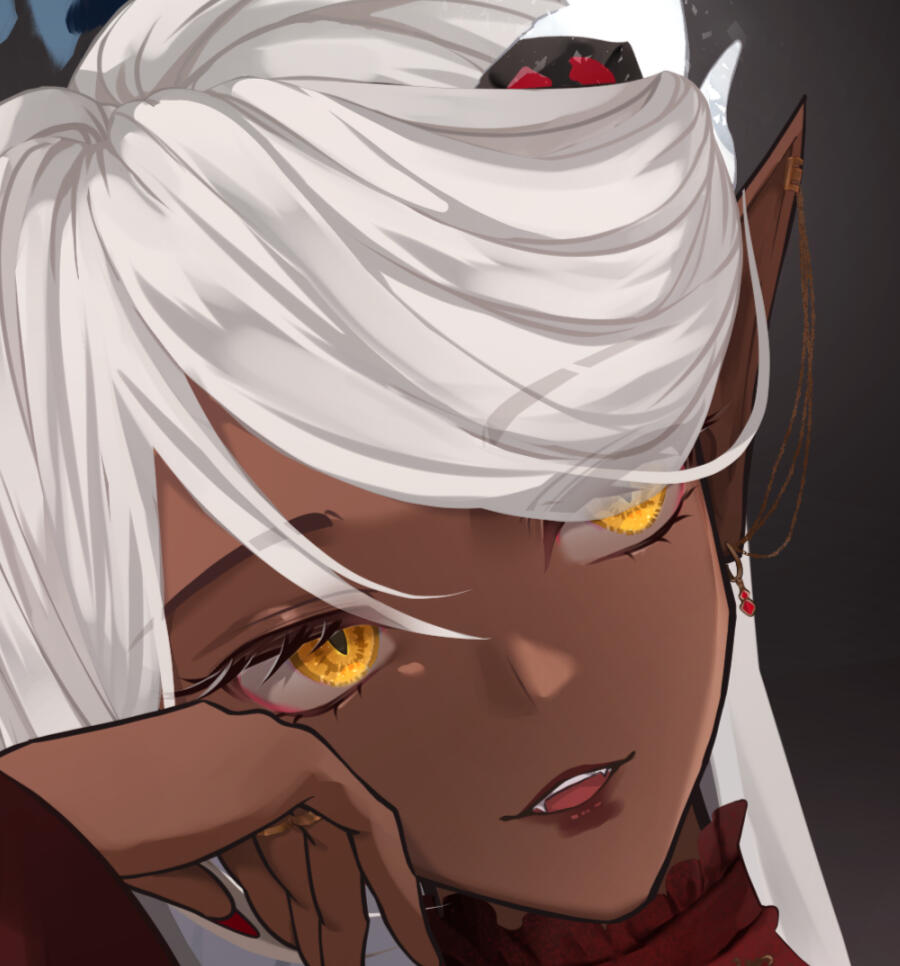
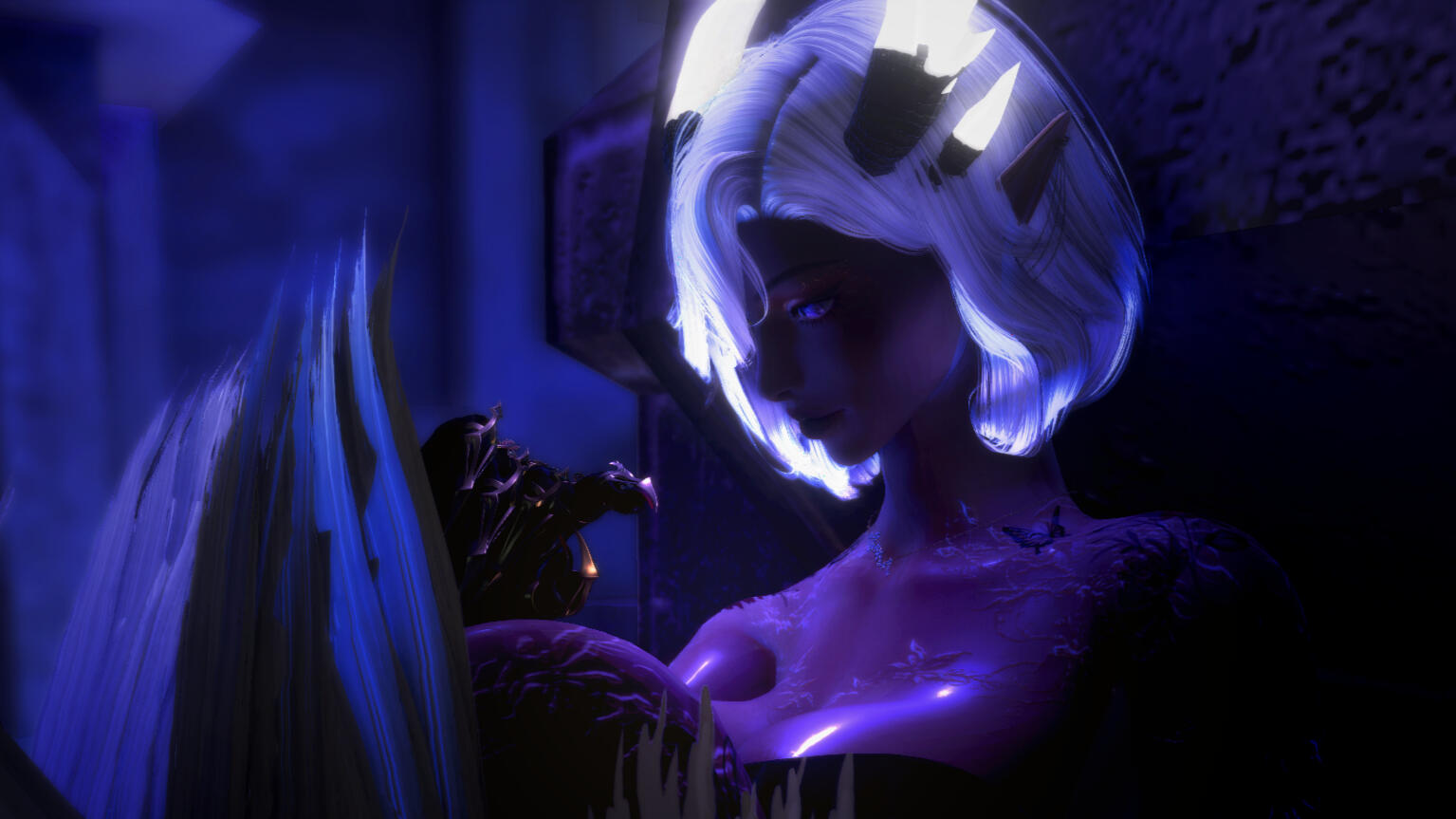
Aurore was born a contradiction, an anomalous creature whose very existence felt like an afterthought of ash and smoke. To look upon her was to look upon something inherently detached from the natural order. The abnormally small frame, the needle-like pupils, the stark white hair—she was a dragon bound in a humanoid form, an entity meant for vast, empty skies trapped inside a fragile shell. Even within the quiet sanctuary of the Hingashi islands, where two gentle scholars raised her on a steady diet of pressed flowers and ancient languages, she could feel the edges of her own wrongness. The neighbors didn't just see a quiet child; they felt an oppressive stillness that made the local animals alert and uneasy.
Aurore spent her formative years in a silent, desperate war against her own skin. She did not know how to occupy a space without suffocating it. Her adoptive parents loved her with a fond, scholarly curiosity, but their warmth only heightened the chilling realization that she was a predator sitting at a hearth. When violence ripped those scholars from her life, it felt less like a tragic twist of fate and more like the universe correcting a mistake. The world had finally come to reclaim the ash she was born from. Left entirely alone, she ceased trying to be a person. If the world insisted on viewing her as an unsettling omen of death, she would give them exactly what they feared. She surrendered her identity to the name Vesper and allowed herself to become a flawless, unfeeling instrument of execution.
The assassin years didn't cure her self-loathing; they weaponized it. She measured her worth by the silence of her targets, utilizing The Petal Fang to erase lives without a sound. Yet, the true fracture of her identity occurred when she collided with Kaine. For a woman who had spent centuries believing she was fundamentally illegible to the world, Kaine’s ability to effortlessly read her silence was terrifying. He did not look at her as a monster or a tool. When he gave her deep red roses, he was staging a quiet, daily rebellion against her own worst understanding of herself. You are not only what you do, his actions insisted, but Aurore didn't know how to believe him.
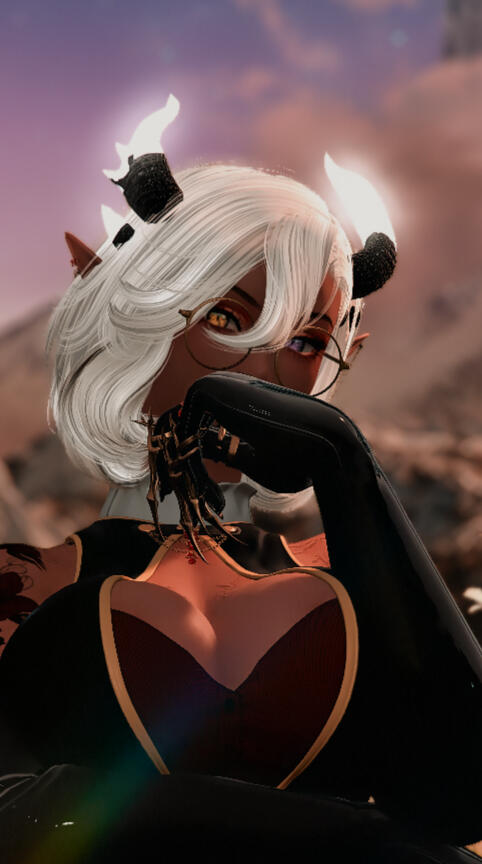
Then came the void. It crept up her limbs like winter, turning her flesh a corrupted, pitch-black color from the elbows and knees down. It didn’t hurt, and that was the part that truly hollowed her out—the darkness felt natural. It felt like her internal monstrousness was finally bleeding through to the surface, staining her body to match her soul.
When the cathedral burned and Kaine forced her to honor their blood pact, she was caught in a cruel paradox. To love him meant she had to kill him. Shoving her dagger through his heart didn't just end his life; it permanently severed whatever fragile thread of humanity she had been trying to spin. The woman who walked out of those flames was a ghost carrying a fortune of blood money, firmly convinced that she was a walking blight. She wore spider lilies in her very scales—a natural birthmark representing a path of no return, a permanent farewell to peace.
Gridania was supposed to be a place to disappear, but instead, it became her greatest battlefield. When she bought the building in the Black Shroud and began constructing a sanctuary of books and quiet luxury, she was plagued by an agonizing imposter syndrome. Every brick she laid with her void-darkened hands felt like a lie. She was an elite assassin trying to play the part of a graceful host. She had filled half the guild with books to honor the scholars who died because of her, and the other half with clove candles to memorialize the man she had murdered. She built a literal monument to her grief and invited the public inside.
When the local merchants and deceitful associates betrayed her, it almost felt like a relief. Their cruelty was a language she understood. Sitting alone in that half-built library, surrounded by unpacked books, she spiraled into the familiar darkness: peace is not a thing I am built to have. Everything I touch eventually burns.
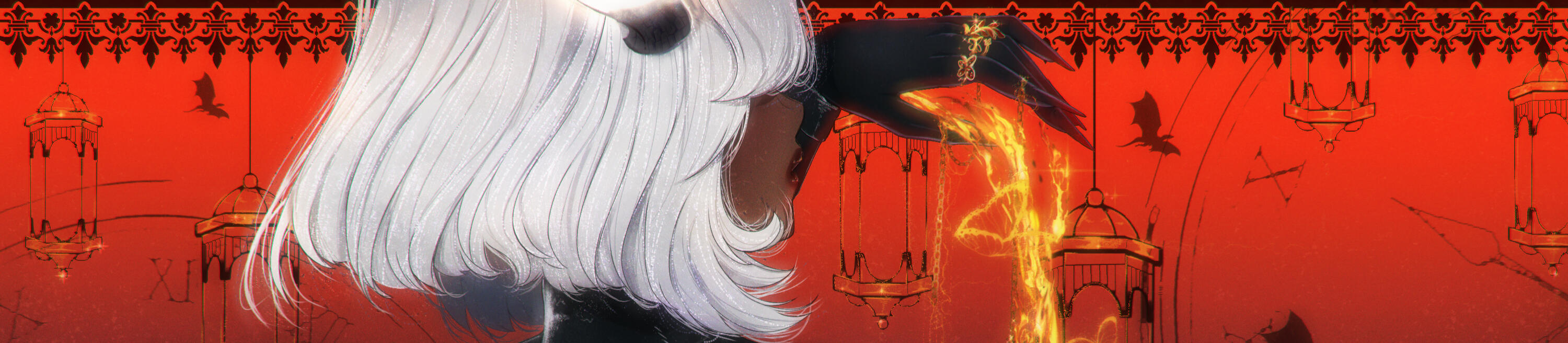
Yet, the true mental battle wasn't surviving the betrayals—it was surviving the success that followed. The guild survived. It thrived. She had earned a genuine haven, built piece by piece from nothing, but her mind rejected the comfort. She constantly scans every room for exits. She keeps her hands caged in golden claws, gripping them as a reminder of the hidden weapon she cannot let go of. She has built a kingdom of safety for others, yet she treats her own presence within it as a temporary intrusion, waiting for the day the illusion shatters and she is forced to become a blade once more.
To the adventurers and scholars who frequent her halls, Aurore Laon is an unshakeable force. She commands rooms without speaking a single word, settling over the environment like inescapable smoke. Her history of trauma has forged her into an apex protector. Because she lost her parents and because she lost Kaine, she possesses a terrifying vigilance. She notices everything—the companion who isn't eating, the guard who returns too quiet from a hunt. She loves in absolute silence and from a calculated distance, orchestrating a hundred ways to shield her people without ever making an announcement. She is incredibly strong because she has looked directly into the abyss of a burning cathedral, held the ashes of her life, and kept standing out of a stubborn refusal to stop.
But this strength is a brittle veneer. Aurore is far more fragile than anyone realizes because her composure is completely dependent on total isolation. She is a woman hollowed out by grief, terrified that any genuine connection will inevitably invite a catastrophic fire. She can face down a syndicate or outmaneuver cutthroat rivals without blinking, but a moment of genuine, unconditioned affection leaves her paralyzed.
When Gulbrand offers his loud, unashamed love, it doesn't comfort her; it terrifies her—and she has chosen him anyway. When Saya sits with her in the dark, refusing to leave, it fractures her armor. She handles her profound sorrow entirely alone, weeping only when the lights are out and there is no one to witness the cracks in her mask. Her tail, twitching with the emotions her face refuses to show, is a painful reminder that she cannot entirely deaden her heart. She is a glass structure under immense pressure—imposing, sharp, and brilliantly clear, but carrying a single flaw that could cause her to shatter completely if someone manages to touch the raw nerve of her hidden grief.